
Why Generic Pest Control Advice Fails in Cairns
On this page
- Why Cairns Pest Control Needs a Tropical Strategy, Not Generic Advice
- Why Standard Pest Control Advice Fails in Cairns
- The Cairns Pest Calendar: Understanding Seasonal Triggers
- Cyclone Season: The Gap in Standard Advice
- What Actually Works: Cairns-Specific Solutions
- Common Cairns Pests That Southern Guides Miss
- The Cost of Following Wrong Advice
- When Professional Assessment Becomes Essential
- Regional Pest Patterns Across Cairns
- Moving Beyond Generic Solutions
- Frequently Asked Questions
- Get pest control built for Cairns, not the southern states
Why Cairns Pest Control Needs a Tropical Strategy, Not Generic Advice
Living in Cairns means dealing with pest challenges that would shock residents in Melbourne or Adelaide. The year-round humidity, proximity to World Heritage rainforest, and cyclone season create a perfect storm for pest infestations that standard Australian pest control advice simply doesn’t address.
In our work with Cairns property owners at Tropical Palms Pest Management, we’ve seen countless residents follow generic advice that works in temperate climates but fails spectacularly in Far North Queensland. The reality is that Cairns requires a fundamentally different approach. Standard three-monthly treatment cycles that suit Brisbane leave dangerous gaps during our peak breeding seasons. Moisture creates new entry points faster than you can seal them. And the pest pressure from adjacent rainforest ecosystems means we’re not just managing suburban populations—we’re holding back one of the most biodiverse regions on Earth.
This guide explains why Cairns is different, what the seasonal triggers actually are, and which strategies work when southern solutions don’t.
Why Standard Pest Control Advice Fails in Cairns
Most pest control information available online assumes a temperate Australian climate with distinct seasons, occasional rain, and manageable humidity. This advice crumbles when applied to Cairns’ unique environment.
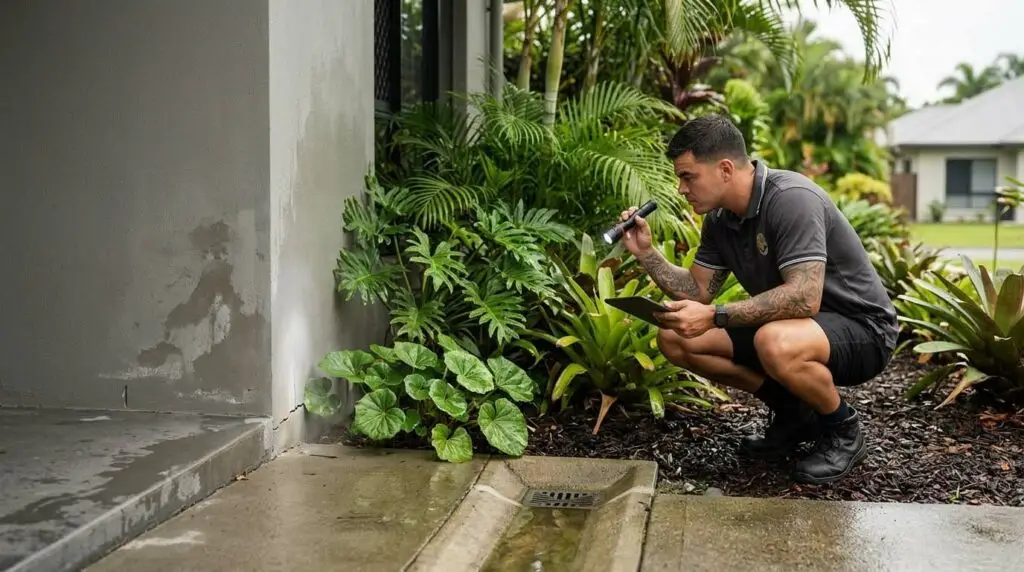
The average humidity in Cairns hovers around 70% year-round. Pests don’t just survive—they thrive. Traditional advice like “seal cracks and treat quarterly” ignores the reality that in Cairns, moisture creates new entry points faster than you can seal them. Three-month treatment cycles leave dangerous gaps during peak breeding seasons.
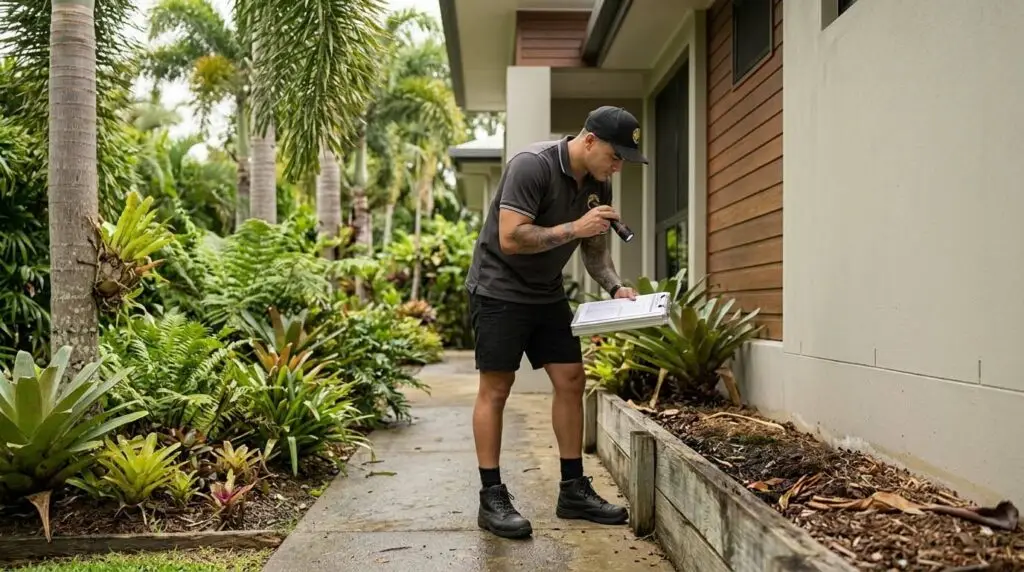
I’ve inspected Cairns homes where residents diligently followed advice designed for Sydney or Melbourne. They sealed every visible crack, applied store-bought treatments quarterly, and wondered why German cockroaches still erupted from wall cavities every wet season. The issue wasn’t effort. It was applying temperate-climate logic to a tropical reality.
The Rainforest Factor
Cairns sits adjacent to the Daintree Rainforest and Wet Tropics World Heritage Area. This proximity means we’re dealing with pest pressure from one of the most biodiverse ecosystems on Earth. Unlike suburban areas in southern Australia where pest populations are relatively controlled, Cairns properties face constant migration pressure from native pest species.
Termites don’t just establish colonies in your garden. They migrate from established rainforest colonies that have existed for decades. This requires detection and prevention strategies that go far beyond what’s needed in Brisbane or Sydney.
The Cairns Pest Calendar: Understanding Seasonal Triggers
Whilst southern Australia has four distinct seasons affecting pest behaviour, Cairns operates on a different cycle that most generic advice ignores.
Wet Season Surge (November to April)
The wet season brings intense humidity spikes and heavy rainfall that creates breeding conditions unlike anywhere else in Australia. During this period:
- Termite activity increases dramatically as soil moisture levels support rapid colony expansion
- Cockroach populations explode in wall cavities and roof spaces where humidity concentrates
- Ant colonies subdivide and spread as waterlogged nests force relocation
- Mosquito breeding accelerates in standing water that appears overnight
Traditional quarterly treatments scheduled for January and April miss the December surge when pest populations are establishing their wet season strongholds.
In December 2023, we saw German cockroach populations in Cairns CBD apartment blocks triple within a fortnight following the first heavy rains. Residents who had treatments in October found themselves overwhelmed by mid-December. That six-week gap was all it took.
Dry Season Concentration (May to October)
The dry season doesn’t eliminate pests. It concentrates them around water sources and drives them indoors. This period sees:
- Increased indoor ant activity as outdoor water sources dry up
- Spider movement into homes seeking humidity and prey
- Rodent pressure on properties with accessible water sources
- Termite activity around irrigation systems and air conditioning condensation
Generic advice suggests reducing treatments during cooler months. In Cairns, this period requires targeted protection around water sources and entry points that remain active year-round.
Southern advice not working?
Get a pest plan built for Cairns’ tropical climate, backed by our 6-month guarantee.
Cyclone Season: The Gap in Standard Advice
No generic Australian pest control guide adequately addresses cyclone preparation and recovery, yet this represents one of Cairns’ biggest pest control challenges.
Pre-Cyclone Vulnerabilities
Cyclone preparation often involves removing or securing outdoor items that create temporary pest harbourage, sealing properties in ways that can trap existing pest populations inside, and disrupting regular treatment schedules when properties become inaccessible.
Without proper pre-cyclone pest assessment, residents often discover significant infestations when reopening secured properties.
Post-Cyclone Pest Explosions
After cyclones, several factors combine to create pest population booms. Damaged structures provide new entry points that weren’t present before. Standing water creates breeding grounds in previously dry areas. Displaced wildlife brings pest populations into suburban areas. Debris accumulation provides temporary shelter for establishing colonies.
Following Cyclone Jasper in December 2023, we received a 300% increase in call-outs from properties in the Cassowary Coast and Cairns northern beaches. The combination of structural damage, standing water in unusual locations, and disrupted treatment schedules created ideal conditions for rapid pest establishment. Standard pest control schedules don’t account for these cyclone-related pest surges, leaving properties vulnerable during critical re-establishment periods.
What Actually Works: Cairns-Specific Solutions
Effective pest control in Cairns requires understanding these unique challenges and adapting strategies accordingly.
Humidity-Adapted Treatment Protocols
In Cairns’ humid environment, traditional spray treatments often lose effectiveness faster than in drier climates. Successful pest control requires:
- Moisture-resistant formulations that maintain potency in high humidity
- Targeted application methods that account for condensation and surface moisture
- Humidity monitoring to predict peak treatment needs
- Ventilation assessment to identify moisture accumulation zones
We use products like Syngenta Optigard Ant Gel and BASF Termidor, both specifically formulated to maintain effectiveness in high-moisture environments. Standard pyrethroids break down rapidly in Cairns’ humidity.
Seasonal Treatment Intensification
Rather than standard quarterly treatments, effective Cairns pest control follows local environmental cycles:
Pre-wet season preparation (October–November) focuses on establishing barriers before pest populations surge.
Wet season monitoring (December–March) involves regular inspections and targeted treatments as conditions change.
Dry season consolidation (April–September) emphasises eliminating established populations and protecting water sources.
Tropical Palms Pest Management has developed specialised treatment packages that align with these local patterns rather than generic quarterly schedules.
Common Cairns Pests That Southern Guides Miss
Generic Australian pest control information often fails to address pests that are significant problems in tropical North Queensland but rare or absent in southern cities.
Green Tree Ants
These aggressive native ants (Oecophylla smaragdina) build large nests in trees and shrubs around Cairns properties. Unlike common black ants covered in standard guides, Green Tree Ants require specialised treatment approaches due to their arboreal lifestyle and territorial behaviour.
They’re beneficial in orchards but a nightmare near outdoor entertaining areas. Standard ant baits don’t reach canopy nests.
Rhinoceros Beetles
Large beetles that damage palm trees and outdoor lighting—virtually unknown in temperate Australia but a significant landscape pest in Cairns. Generic treatments targeting small household beetles are ineffective against these insects.
Tropical Huntsman Spiders
Whilst huntsman spiders exist throughout Australia, the tropical species in Cairns grow larger and behave differently than their southern cousins. Standard spider treatments often fail because they don’t account for the unique harbour preferences of tropical species.
For detailed identification information, refer to our tropical Queensland pest identification guide and our article on common pests in tropical regions.
The Cost of Following Wrong Advice
Using pest control strategies designed for temperate climates in Cairns often leads to:
Treatment failure cycles where infestations return quickly because the underlying tropical conditions weren’t addressed.
Structural damage from termites and borers that proliferate in humid conditions faster than quarterly treatments can detect.
Health risks from disease-carrying pests that thrive in tropical conditions but aren’t adequately controlled by temperate-climate strategies.
Increased long-term costs from repeatedly applying ineffective treatments rather than investing in tropical-specific solutions initially.
Understanding realistic pest control pricing in Cairns helps residents make informed decisions about appropriate treatment levels.
When Professional Assessment Becomes Essential
Whilst some basic pest prevention applies universally, Cairns residents face conditions where professional assessment isn’t just helpful—it’s necessary for effective control.
Property-Specific Risk Factors
Every Cairns property has unique pest risk factors related to:
- Proximity to natural areas and the specific pest populations they harbour
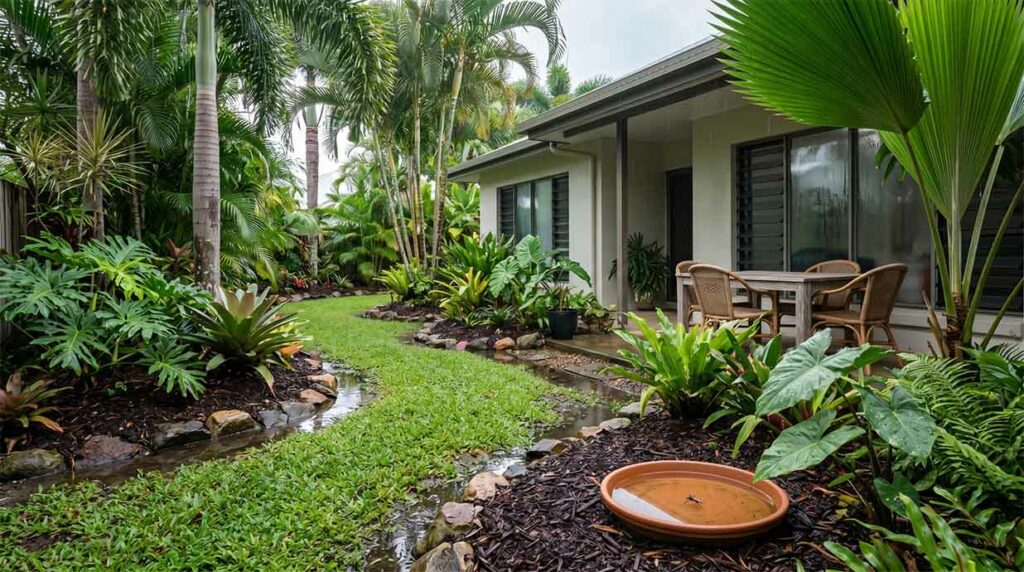
- Microclimatic conditions created by landscaping, structures, and drainage
- Seasonal water patterns that vary dramatically between properties
- Building materials and age that respond differently to tropical conditions
Generic advice cannot account for these property-specific variables that significantly impact pest control effectiveness.
A timber Queenslander in Edge Hill faces completely different termite pressure than a brick-veneer home in Bentley Park. The Queenslander’s stumps, subfloor ventilation, and timber construction create entry points and conducive conditions that the brick home doesn’t have. But the brick home’s concrete slab might conceal termite entry until damage is severe. Both need professional assessment, but the risk profile is entirely different.
Specialised Detection Requirements
Many tropical pests require detection methods that general guides don’t cover:
- Termite detection in high-moisture environments where traditional signs may be obscured
- Moisture mapping to predict pest development areas
- Structural assessment for tropical-specific vulnerabilities
- Native species identification to distinguish between pest and beneficial insects
Tropical Palms Pest Management offers comprehensive property assessments that identify these Cairns-specific factors and develop targeted treatment strategies.
Regional Pest Patterns Across Cairns
Even within Cairns, different areas face varying pest pressures that generic advice cannot address.
Coastal Properties
Properties near Trinity Beach, Palm Cove, or Clifton Beach deal with salt air corrosion that affects barrier treatments, sandfly populations during certain wind conditions, and unique ant species adapted to coastal environments.
We’ve found that standard barrier treatments on beachfront properties in Palm Cove require reapplication every 8–10 weeks rather than the standard 12-week cycle. Salt spray degrades residual treatments faster.
Rainforest-Adjacent Areas
Properties backing onto Barron Gorge, Crystal Cascades, or Kuranda areas face constant migration pressure from native pest populations and require ongoing barrier maintenance rather than periodic treatments.
Urban Centre Locations
Denser urban areas around Cairns CBD experience different pest patterns related to drainage systems, building density, and waste management that create unique pest corridors.
Moving Beyond Generic Solutions
Effective pest control in Cairns requires abandoning one-size-fits-all approaches and embracing strategies designed for tropical conditions.
This means understanding that pest control here isn’t just about eliminating current infestations. It’s about managing ongoing pressure from one of Australia’s most pest-friendly environments.
Successful long-term pest management in Cairns combines:
- Environmental assessment of property-specific risk factors
- Seasonal treatment scheduling aligned with local pest cycles
- Ongoing monitoring adapted to rapid tropical pest development
- Integrated approaches that address moisture, structural, and biological factors simultaneously
For residents dealing with persistent pest problems despite following standard advice, a professional assessment specifically focused on tropical pest management often reveals why generic approaches have failed and what targeted solutions actually work.
Contact Tropical Palms Pest Management for a property assessment that addresses your specific Cairns pest challenges rather than applying southern Australia solutions that ignore our unique tropical environment.
Cairns Pest Control Questions
Frequently Asked Questions
How often should I get pest control in Cairns compared to Brisbane or Sydney?
Cairns requires more frequent treatments than southern Australia due to year-round breeding conditions. Most properties benefit from treatments every 6–8 weeks during wet season (November–April) and 10–12 weeks during dry season, rather than the standard quarterly (12–13 week) schedules that work in temperate climates. The humidity and constant pest pressure from adjacent rainforest mean longer gaps leave your property vulnerable.
Why do cockroaches keep coming back even after professional treatment?
Cairns’ humidity allows cockroach eggs to survive treatments that would eliminate them in drier climates. German cockroach oothecae (egg cases) are particularly resilient in moist environments like wall cavities and roof spaces where humidity concentrates. Successful control requires targeting breeding sites with moisture-resistant products and follow-up treatments timed to the local hatch cycle, not just a single application.
Is termite control different in tropical climates like Cairns?
Yes, significantly. Termites remain active year-round in Cairns, unlike temperate areas where cold weather slows activity to near-dormancy for months. This requires continuous monitoring and barrier maintenance rather than seasonal treatments. Soil moisture during our wet season can also dilute or displace chemical barriers faster than in drier regions, meaning more frequent inspections and potential barrier top-ups.
Can I just use DIY pest control products from Bunnings?
Whilst basic prevention helps, Cairns’ pest pressure from adjacent rainforest areas and rapid breeding cycles usually overwhelm DIY approaches within weeks. Store-bought surface sprays break down quickly in our humidity. Ant baits designed for temperate species often don’t attract tropical ant species. For long-term control, professional treatment with moisture-resistant formulations and property-specific application becomes necessary, not optional.
What should I do about pests before and after a cyclone?
Pre-cyclone pest assessment and treatment prevents pest populations from becoming trapped inside sealed properties. We recommend treatment 1–2 weeks before cyclone season begins. Post-cyclone inspections (within 7–10 days of reopening) address new entry points and breeding sites created by storm damage, standing water in unusual locations, and debris accumulation. Don’t wait for visible infestations, they establish fast after cyclones.
Why are my pest problems worse than my neighbour’s?
Property-specific factors create huge variations even on the same street. Landscaping (dense gardens vs. sparse), drainage patterns, building materials, subfloor ventilation, proximity to creeks or bushland, and even outdoor lighting all affect pest pressure. A professional assessment identifies your property’s specific vulnerabilities rather than applying generic treatments.
Get pest control built for Cairns, not the southern states
Stop applying temperate-climate advice to a tropical problem. Our local, licensed technicians assess your property’s specific risk factors and build a seasonal plan that actually holds back Far North Queensland’s pest pressure, backed by our 6-month guarantee.
- 7+Years Serving Cairns
- 1,700+Homes Made Pest-Free
- 230+5-Star Google Reviews
- 6-MthService Guarantee*
Residential pest control in Cairns
 Eco-Friendly Pest Control
Native Australian Wildlife vs Pests: Protecting Animals During Pest Control in Cairns
 Expert Pest Control Guides