
Rodent Health Risks in Cairns: What Tropical Queensland Residents Need to Know
On this page
- Why Cairns Residents Face a Higher Rodent Health Risk Than Most Australians
- Which Diseases Do Rats and Mice Actually Spread in Tropical Queensland?
- How Do Rodents Transmit Disease — Direct Contact, Droppings, or Something Else?
- What Are the Warning Signs That Rodents Have Already Contaminated Your Home?
- Who Is Most Vulnerable to Rodent-Borne Illness in Your Household?
- What Should You Do If You Suspect Rodent Activity in Your Cairns Property?
- Why DIY Rodent Control Often Makes the Health Risk Worse, Not Better
- How a Local Pest Professional Safely Resolves a Rodent Problem
Living in Cairns puts you in a genuinely different category when it comes to rodent health risk. The wet-dry seasonal cycle of Far North Queensland creates rodent invasion patterns, pathogen survival conditions, and contamination dynamics that simply do not occur in Sydney, Melbourne, or even Brisbane. If you are trying to understand whether the rats or mice you have noticed in your home are a real health threat, the answer for a Cairns household is yes, and the reasons are specific to this environment.
This article explains what those risks actually are, how contamination reaches your family, and what a safe, effective response looks like for a tropical Queensland property.
Self-Check · 60 seconds
How exposed is your Cairns home to rodent health risk?
Four quick questions, calibrated to Far North Queensland conditions. No email, no obligation — you’ll get a tailored answer at the end.
Question 1 of 4
Have you spotted any of these in your home in the past 30 days?
Droppings, gnaw marks, grease smears along walls, an ammonia-like odour in a closed room, a dead rodent, or your pet showing unusual interest in walls or roof spaces.
Question 2 of 4
What kind of home do you live in?
Construction style changes which entry points and harbourage areas rodents typically exploit in Cairns.
Question 3 of 4
Does anyone in your household fall into a higher-risk group?
Children under 12, pregnant women, elderly family members, anyone immune-compromised, or anyone with asthma or a respiratory condition.
Question 4 of 4
Have you already tried any DIY cleanup steps?
Sweeping or vacuuming droppings, removing nesting materials, or sealing entry points before clearing the population.
Low exposure risk
Your home isn’t showing acute warning signs right now.
That’s good news. But Cairns’ dry-season rodent pressure builds quickly — an annual general pest treatment keeps minor activity from escalating into the bigger problem this article describes, and it’s covered by our 6-month guarantee.
Get a free annual check quoteElevated exposure risk
You’re showing one or more risk factors worth acting on.
Your answers match patterns the article calls out as significant in Cairns’ tropical context. A professional inspection right now identifies what’s already happening — and what’s about to happen as dry-season pressure peaks. Our 6-month guarantee covers anything that returns.
Book a free inspectionHigh exposure risk — act this week
Your answers match the higher-exposure pattern we treat regularly.
Important: do not sweep or vacuum droppings in the meantime — the “What should you do” section above explains why aerosolising contaminated material makes things worse. Our team can typically be on-site within 48 hours for suspected active infestations across Cairns and the Northern Beaches.
Request a priority assessmentWhy Cairns Residents Face a Higher Rodent Health Risk Than Most Australians
Cairns' wet season, running roughly November to April, provides rodents with abundant food, water, and dense outdoor vegetation in which to breed. Populations build up significantly during this period. When the dry season arrives from around May or June, those large populations lose their outdoor resources and move toward human dwellings in concentrated waves. This is not the gradual, year-round trickle of rodent activity that temperate cities experience. It is a seasonal surge.
At Tropical Palms Pest Management, we see this play out across Cairns properties every single year with reliable timing. In our work with households from Machans Beach through to the Atherton Tablelands, the dry-season influx typically arrives within a predictable two-to-three-week window. That consistency tells us something important: this is a structural feature of the Far North Queensland environment, not random bad luck for individual homeowners.
The health consequence of that surge is higher exposure intensity. Instead of encountering one or two rodents over several weeks, a Cairns household can find itself dealing with a significant population that deposits droppings, urine, and nesting debris across multiple areas of the home within a short period. More contamination in a shorter timeframe means greater exposure risk for your family before you may even realise the problem exists.
Cairns' consistently warm temperatures extend pathogen survival well beyond what a southern Australian winter would allow. Bacteria and viruses present in rodent waste die off relatively quickly in, say, a Melbourne July. In Cairns, those same pathogens can remain viable in contaminated materials for weeks or months, depending on the organism. The humidity compounds this further: moisture supports pathogen survival while simultaneously attracting more rodents into your home. The very conditions that drive the invasion also amplify what the invaders leave behind.
Which Diseases Do Rats and Mice Actually Spread in Tropical Queensland?
Leptospirosis is the most significant rodent-borne health threat for Far North Queensland residents. Queensland Health specifically identifies it as a public health concern in our region. The bacterial infection spreads through contact with rodent urine, either directly or through water and soil that rodents have contaminated. In Cairns' warm, humid environment, the responsible bacteria can survive for weeks, particularly in areas with standing water or persistently damp soil such as subfloor spaces after wet season rain.
What makes leptospirosis particularly difficult to manage is that its early symptoms closely resemble dengue fever: sudden high fever, severe headache, intense muscle aches, and nausea. That overlap can delay diagnosis, and delayed treatment allows the infection to progress toward serious complications affecting the kidneys, liver, or nervous system. HealthDirect documents this progression risk in detail, and the World Health Organisation classifies leptospirosis as one of the most widespread zoonotic diseases globally. In our experience treating properties across the Cairns region, subfloor spaces in high-set Queenslander homes are where leptospirosis risk concentrates most, because these areas stay damp long after wet season rain and are rarely inspected by homeowners.
Salmonella is another genuine concern, with rodent droppings acting as the primary contamination source in kitchen and food storage areas. The bacteria multiply rapidly in warm conditions, so surfaces contaminated in a Cairns home present a faster-developing food poisoning risk than the same level of contamination in a cooler climate.
Rat-bite fever, while less common, occurs more frequently in tropical regions because human-rodent encounters increase during the seasonal invasion period. It can develop not only from bites or scratches but from handling contaminated materials, and the bacteria responsible remain viable longer in Cairns' warmth than in cooler parts of the country.
Hantavirus remains rare in Australia, but it is worth noting because dry season conditions create exactly the type of dusty, disturbed environment where transmission risk increases. The virus spreads through inhaling contaminated dust, which makes the cleanup phase of any rodent problem a risk in itself if handled incorrectly.
How Do Rodents Transmit Disease — Direct Contact, Droppings, or Something Else?
Most Cairns families focus on avoiding direct contact with live rodents, which is sensible, but it addresses only a small part of the transmission picture. The majority of disease exposure occurs through contaminated materials that rodents leave behind, often in areas of your home that look clean to the naked eye.
Droppings concentrate pathogens in the spaces where your family eats, sleeps, and stores food. Fresh droppings contaminate surfaces directly on contact. Older droppings become dangerous in a different way: when disturbed during cleaning, they break apart and release particles into the air. In Cairns, lower indoor humidity during the dry season means these particles aerosolise readily, creating inhalation risk when you sweep, vacuum, or shift stored items in a contaminated area.
Urine contamination is often invisible and therefore underestimated. Rodent urine soaks into timber, grout, cardboard, and fabric, and it can remain infectious for extended periods in our warm environment. Unlike droppings that you can see and avoid, urine contamination spreads silently across kitchen benches, pantry shelves, and children's storage areas without any obvious sign.
Live in a high-set Queenslander?
Subfloor spaces are where leptospirosis risk concentrates most in Cairns homes — they stay damp long after wet-season rain and rarely get inspected. A proper assessment includes them by default.
Request a free subfloor inspectionNesting materials present a concentrated hazard. Rodents incorporate paper, fabric, insulation, and organic matter into their nests, and these materials become saturated with urine and droppings over time. When nesting sites are disturbed during cleaning or renovation work, the disturbance releases a concentrated pathogen load into your home's air. This is one of the most significant risks associated with DIY attempts to clear a rodent problem without professional guidance.
Surface contamination is the most common transmission route for Cairns families day to day. Rodents move across benchtops, utensils, food packaging, and other surfaces as they travel through your home at night. Children are at particularly high risk because they are more likely to place contaminated hands or objects in their mouths.
What Are the Warning Signs That Rodents Have Already Contaminated Your Home?
In Cairns, early detection matters more than it does in cooler climates because warmth accelerates both rodent reproduction and pathogen development. By the time contamination becomes obvious, it may already be widespread.
Visual signs are the most straightforward starting point. Small, dark droppings in pantries, under sinks, in roof void access areas, or along skirting boards confirm active rodent presence. Gnaw marks on food packaging, timber architraves, or electrical cabling indicate ongoing activity. Grease smears along walls and skirting boards mark the regular travel routes where contamination is most concentrated.
Odour changes are often the first signal in Cairns' humid environment, where organic contamination develops distinctive smells more quickly than in drier climates. An ammonia-like odour in a closed room or cupboard points to urine contamination. The smell of a dead rodent, once you have encountered it, is unmistakable, and it signals decomposition that can attract secondary pests like blowflies that extend the contamination problem.
Unexplained illness patterns within your household are worth taking seriously. If multiple family members develop gastrointestinal symptoms, fever, or respiratory irritation without a clear cause, and the symptoms occur after spending time in specific areas of the home, rodent contamination is worth investigating. This is particularly relevant in Cairns given leptospirosis symptoms can be confused with dengue fever and other tropical illnesses.
Your pets can function as an early warning system. Dogs and cats commonly detect rodent activity well before humans notice physical signs, showing unusual interest in wall cavities, roof access points, or under-house areas. A pet that refuses to eat from its usual bowl or develops gastrointestinal illness may have encountered contaminated surfaces.
Who Is Most Vulnerable to Rodent-Borne Illness in Your Household?
Children face the highest risk because their developing immune systems offer less protection against pathogens, and their everyday behaviour, touching surfaces and putting hands near their mouths without thinking, creates frequent exposure opportunities. This is not about poor hygiene; it is normal child behaviour that becomes a health issue in a contaminated environment.
Pregnant women represent another high-risk group. Leptospirosis in particular can cause serious complications during pregnancy, and foodborne illness from contaminated surfaces can lead to dehydration and other outcomes that affect both mother and baby.
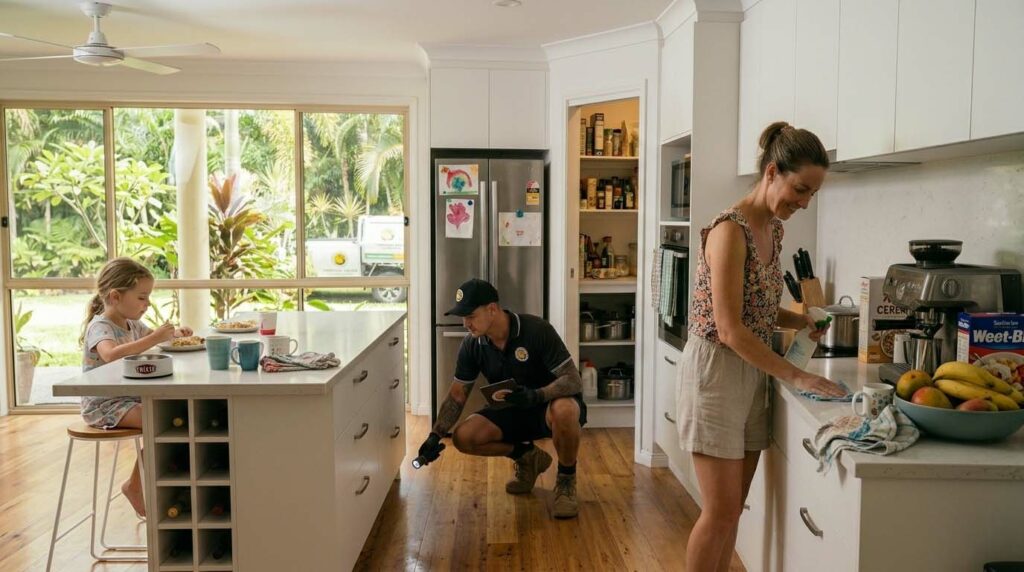
Elderly family members, particularly those with existing health conditions or who take medications that affect immune function, may struggle to recover from rodent-borne infections that a healthy adult would shake off in a week. Complications are more likely and recovery times longer.
People with chronic conditions including diabetes, kidney disease, or autoimmune disorders face increased vulnerability because their bodies cannot mount standard responses to infection. Leptospirosis is particularly dangerous for anyone with pre-existing kidney impairment because the bacteria specifically targets renal tissue.
Anyone with asthma or another respiratory condition faces acute risk from disturbed rodent droppings or nesting materials. Even brief inhalation exposure to contaminated dust can trigger a serious respiratory episode in sensitive individuals. This is one reason that cleaning up a rodent problem without the right protective equipment is genuinely dangerous, and one we explain to every Cairns homeowner who calls us before doing anything else.
What Should You Do If You Suspect Rodent Activity in Your Cairns Property?
The first practical step is to limit access to areas where you have noticed signs of rodent activity, particularly anywhere food is prepared or stored. Restricting movement through contaminated zones reduces ongoing exposure while you assess what you are dealing with.
Do not sweep, vacuum, or move stored materials in contaminated areas before you have a professional assessment. These actions aerosolise pathogens and spread contamination to previously clean surfaces. Take photographs of what you can see without disturbing anything; this helps a pest professional understand the scope of the problem and identify likely entry points.
For food storage in the interim, transfer pantry items to hard-sided, clip-lock containers. Brands like Sistema and Decor are widely available at Cairns stores including Woolworths Earlville and Kmart City Place, and both handle the humidity well without warping. Use disposable plates and utensils in any area you suspect is contaminated, and wash your hands thoroughly after spending time in affected spaces. These measures will not solve the underlying problem, but they reduce exposure risk while you wait for professional assessment.
Contact Tropical Palms Pest Management directly through our contact page for an assessment calibrated to Far North Queensland conditions. Cairns rodent problems have timing, entry point, and pathogen profiles that differ from southern Australian cities, and the treatment approach needs to reflect that.
Why DIY Rodent Control Often Makes the Health Risk Worse, Not Better
The most common DIY mistake is also the most dangerous: vacuuming or sweeping rodent droppings. Both actions aerosolise pathogen-containing particles and distribute them through your home's air. If your home has a ducted air conditioning system, such as a Daikin ducted unit common in newer Cairns builds, that distribution can be thorough and rapid.
Incomplete elimination of contaminated materials is the second major problem. DIY approaches typically address visible droppings in accessible areas but miss hidden nesting sites in roof voids, wall cavities, and subfloor spaces. In a high-set Queenslander or a home with an extensively ventilated roof void, those hidden sites can contain significant quantities of contaminated material that continue posing health risks long after you believe the problem is resolved.
Before you grab the vacuum — read this
Sweeping or vacuuming droppings is the single most dangerous DIY move you can make. It aerosolises pathogens and pushes contamination through your home — fast, in a Cairns climate.
Get a professional assessment before disturbing anything. Same-week bookings across Cairns and the Northern Beaches.
Book an assessmentSealing entry points before eliminating the existing rodent population is a mistake that creates a specific secondary problem. Trapped rodents die inside wall cavities or roof voids, producing decomposition odours, elevated pathogen levels, and attracting blowflies and dermestid beetles that extend and spread the contamination.
Over-the-counter baits and traps, including products like Ratsak or Talon available at Bunnings, can reduce rodent numbers but do not address contaminated materials, do not identify entry points, and do not prevent re-infestation. In Cairns' seasonal context, a new wave of dry-season pressure will re-establish a population in a home with unaddressed entry points within weeks.
How a Local Pest Professional Safely Resolves a Rodent Problem
Professional assessment starts with a systematic inspection of the full property, not just the areas where you have noticed signs of activity. At Tropical Palms Pest Management, we work exclusively across the Cairns region, from Machans Beach and Yorkeys Knob on the northern beaches through to properties on the Atherton Tablelands. That local focus matters because construction styles common to tropical Queensland, including high-set timber homes, heavily ventilated roof voids, and elevated subfloor spaces, create specific entry and harbourage opportunities that an operator without genuine local experience may not recognise.
In our work with Cairns trade businesses and residential clients over the years, we have found that high-set homes on the northern beaches suburbs such as Holloways Beach and Trinity Beach tend to have particularly vulnerable subfloor entry points where pipe penetrations meet older Besser block foundations. These are rarely flagged in generic pest inspection reports but are a consistent source of re-infestation when left unaddressed.
Safe removal of contaminated materials requires appropriate personal protective equipment, containment procedures, and disposal methods that prevent pathogen spread during the process itself. Our technicians are trained in protocols that account for the specific pathogens prevalent in tropical Queensland rodent infestations, including leptospirosis bacteria that can survive in damp materials for extended periods.
Disinfection targets both visible contamination and less obvious sources such as urine deposits on porous timber or in subfloor soil. This step is not optional in a Cairns context; leaving residual contamination in place means your family continues to be exposed even after the rodents themselves are gone.
Entry point identification and sealing is the step that determines whether the problem stays resolved. Our team understands the construction materials and techniques common to Cairns homes, which allows us to identify the specific gaps, pipe penetrations, and ventilation access points that rodents use in this region and seal them effectively.
Ongoing monitoring provides early detection of any new activity before it can re-establish health risks. This is particularly valuable in Cairns given the predictable seasonal pressure that drives new rodent populations toward homes each dry season.
If you are concerned about rodent activity in your Cairns property, contact Tropical Palms Pest Management for a professional assessment suited to Far North Queensland conditions.
Frequently asked
Rodent health risks in Cairns — your questions, answered
How quickly after exposure might leptospirosis symptoms appear?
The incubation period is typically 2 to 30 days, according to HealthDirect. The wide range reflects differences in exposure level and individual immune response.
Because early symptoms resemble dengue fever, any combination of sudden fever, severe headache, and muscle pain following suspected rodent contact is worth raising promptly with your GP or the Cairns Hospital emergency department.
My kids found a dead rat in the backyard. What should I do?
Do not let them handle it, and do not pick it up with bare hands. Use disposable gloves and a plastic bag to double-bag the carcass, then seal and dispose of it in your general waste bin. Wash any skin that may have been in contact with water and soap for at least 20 seconds.
If the rat was inside your home rather than outdoors, call us before removing it so we can assess whether there is an active infestation.
Can rodent-borne diseases spread between people in the same household?
Most rodent-borne diseases, including leptospirosis and salmonella, do not transmit person to person. However, multiple family members can be exposed to the same contaminated surface or material from the original rodent source, which is why it can appear that illness is spreading within a household.
Is a Cairns pest controller going to charge more than a national brand for the same service?
Not necessarily, and the comparison is not straightforward. A national operator following a standardised protocol may miss treatment steps specific to tropical Queensland construction styles or seasonal timing.
The relevant question is whether the treatment is complete, not which brand is cheaper on the initial quote.
How long after professional treatment is it safe to use affected rooms normally?
This depends on the extent of contamination and the products used. We provide specific re-entry and use guidelines for each property we treat.
As a general principle, professionally cleaned and disinfected areas are safe to use once dry, but we recommend confirming this directly with our team based on your specific situation rather than applying a generic timeframe.
The TPPM Promise
If pests return, so do we — at no extra cost.
Every general pest treatment is backed by our 6-month guarantee. Quick, safe, and effective — designed for Cairns conditions and the people (and pets) who live in them.
Lock in your free quoteServicing Cairns, the Northern Beaches & surrounds.
What diseases do rodents spread in Cairns?
 Cockroach Control
How to Permanently Get Rid of Cockroaches in Your Cairns Home
 Ant Control
Why DIY Ant Baits Make Your Cairns Kitchen Infestation Worse
 Eco-Friendly Pest Control