
What Makes Tropical Queensland Pest Identification Challenging?
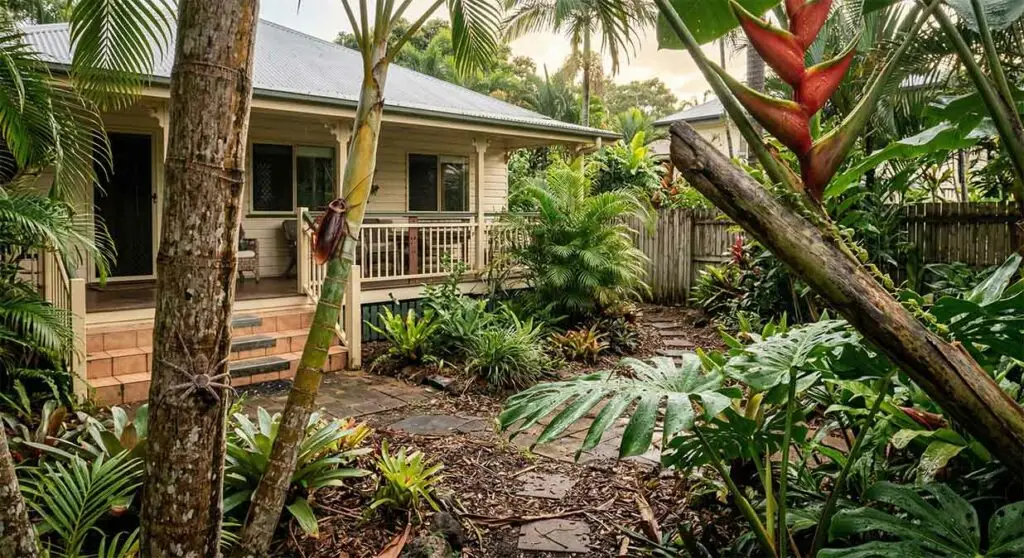
Tropical Queensland’s warm, humid climate creates perfect breeding conditions for numerous pest species that rarely survive in cooler climates. The region’s unique ecosystem supports over 200 common household and garden pest varieties, many of which look remarkably similar to untrained eyes.
As Cairns-based pest control professionals, we encounter identification challenges daily. Homeowners often misidentify pests, leading to ineffective treatments and wasted time. Understanding the distinctive characteristics of tropical Queensland’s most common pests helps ensure proper treatment and prevents recurring infestations.
Most Common Tropical Queensland Household Pests
Green Tree Ants (Weaver Ants)
Green tree ants are among Queensland’s most distinctive tropical pests. These bright green insects measure 8-10mm in length and build paper-like nests by weaving leaves together using silk from their larvae.
Key identification features:
- Bright green colouration on head and thorax
- Orange-brown abdomen
- Large mandibles (jaws)
- Highly aggressive when disturbed
- Found in trees, shrubs, and around outdoor areas
Where you’ll find them: Mango trees, citrus trees, garden shrubs, and sometimes indoors near windows or doors.
German Cockroaches
Despite their name, German cockroaches thrive in tropical Queensland’s climate. These small roaches are the most problematic indoor species due to their rapid reproduction rate.
Key identification features:
- Light brown colour with two dark stripes behind the head
- 12-15mm in length
- Wings present but rarely fly
- Prefer warm, humid areas
- Active primarily at night
Where you’ll find them: Kitchen cupboards, behind appliances, bathrooms, and any area with food debris or moisture.
American Cockroaches
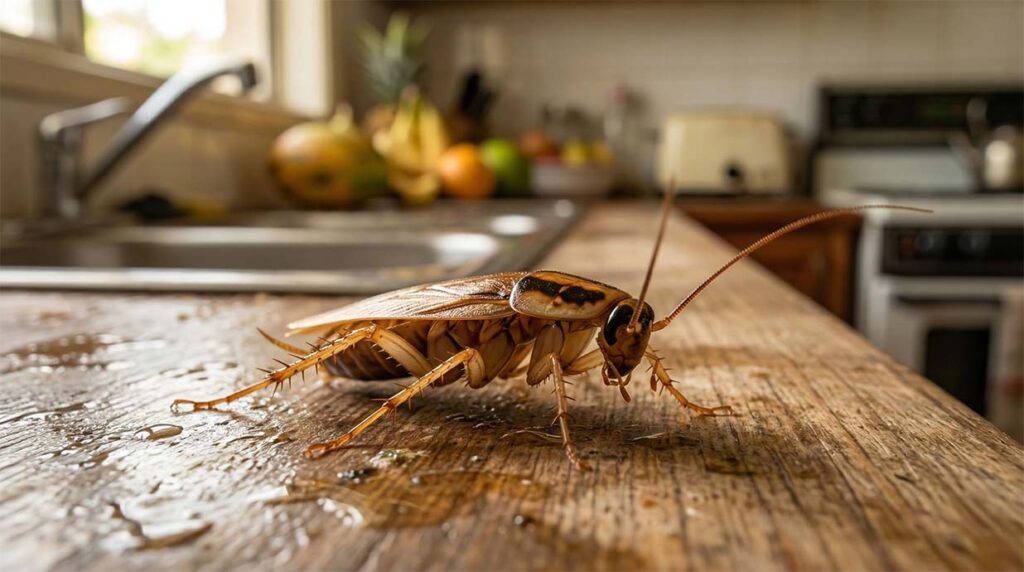
Larger than their German cousins, American cockroaches are reddish-brown and commonly found in Queensland’s tropical regions.
Key identification features:
- Reddish-brown colour with yellowish edges
- 35-40mm in length
- Strong fliers
- Light-coloured band around the head
- Prefer outdoor environments but enter homes seeking food
Where you’ll find them: Drains, sewers, basements, around outdoor bins, and occasionally in kitchens.
Dangerous Tropical Queensland Spiders
Redback Spiders
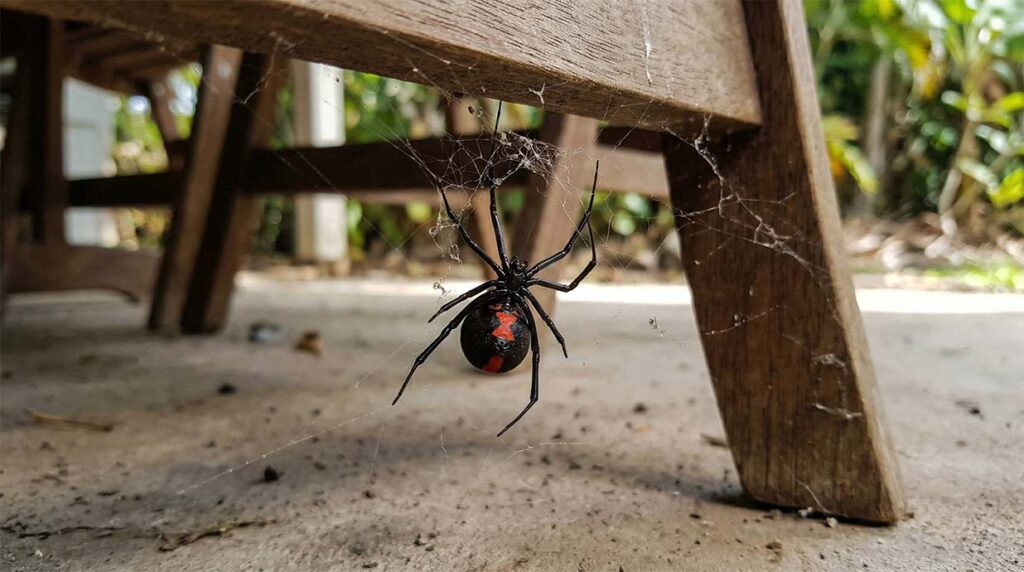
Redback spiders are highly venomous and common throughout tropical Queensland. Proper identification is crucial for safety.
Key identification features:
- Black body with distinctive red marking on abdomen
- Females: 10mm body length (dangerous to humans)
- Males: 3-4mm (not dangerous)
- Messy, irregular webs
- Glossy black appearance
Where you’ll find them: Under outdoor furniture, in sheds, around bins, under eaves, and in cluttered storage areas.
Huntsman Spiders
While not dangerous, huntsman spiders often cause alarm due to their large size and speed.
Key identification features:
- Large body (15-20mm) with leg span up to 160mm
- Greyish-brown with dark markings
- Legs extend sideways rather than forward
- Fast-moving
- Hairy appearance
Where you’ll find them: Behind curtains, under bark, in crevices, and occasionally indoors on walls or ceilings.
Not Sure What Pest You’re Dealing With?
If something around your home or business does not look right, it is better to get it checked early. Our local Cairns team can help identify the pest and point you toward the right treatment before the problem spreads.
Tropical Queensland Flying Insects
Fruit Flies
Tropical Queensland’s year-round fruit production creates ideal conditions for fruit fly populations.
Key identification features:
- Small size (2-3mm)
- Yellowish-brown colour
- Red eyes
- Attracted to fermenting fruit and vegetables
- Rapid reproduction in warm weather
Where you’ll find them: Around ripe fruit, compost bins, drains, and garbage areas.
Mosquitoes
Several mosquito species thrive in tropical Queensland, including disease-carrying varieties.
Key identification features:
- Aedes aegypti: Black with white stripes on legs and body
- Culex species: Brown with lighter markings
- Long, thin legs and needle-like mouthparts
- Most active at dawn and dusk
Where you’ll find them: Around standing water, gardens, under house areas, and near water features.
Flying Termites (Alates)
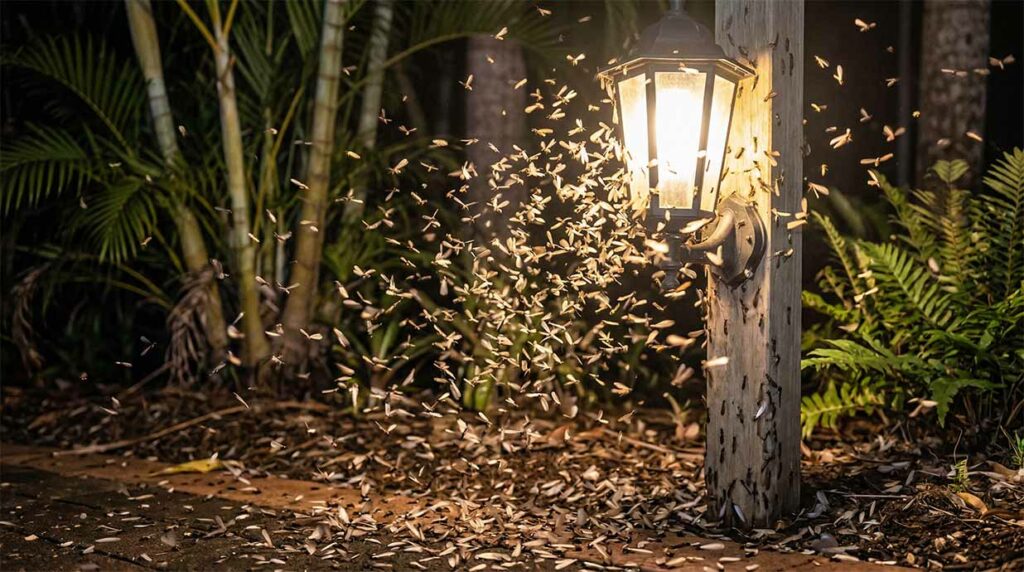
Winged termites often appear after rain, indicating nearby colonies.
Key identification features:
- Four wings of equal length
- Straight antennae
- Thick waist
- Dark brown or black colour
- Wings easily break off
Where you’ll find them: Attracted to lights, around windows, and near established colonies in trees or structures.
Tropical Garden and Outdoor Pests
Rhinoceros Beetles
These large beetles are common in tropical Queensland gardens and can damage palm trees.
Key identification features:
- Large size (25-40mm)
- Dark brown or black colour
- Males have horn-like projection on head
- Heavy, robust build
- Strong fliers attracted to lights
Where you’ll find them: Around palm trees, compost piles, and decaying organic matter.
Green Vegetable Bugs (Stink Bugs)
These shield-shaped bugs are common garden pests that emit foul odours when disturbed.
Key identification features:
- Bright green colour
- Shield-shaped body
- 12-15mm length
- Strong smell when crushed
- Feed on plant juices
Where you’ll find them: On vegetables, fruit trees, ornamental plants, and sometimes indoors.
Get Clear Answers and the Right Treatment
Many tropical pests in Cairns look similar, but they do not behave the same way. We identify the issue properly, explain what is happening, and recommend a treatment plan that suits your property.
How to Document Pest Identification for Professional Help
Taking Useful Photos
When contacting pest control professionals, quality photos significantly improve identification accuracy:
- Use natural lighting when possible
- Capture multiple angles (top, side, close-up)
- Include size reference (coin or ruler)
- Photograph the pest’s location and any damage
- Take photos of droppings or other signs
Recording Behaviour Patterns
Document these details for professional consultation:
- Time of day when pests are most active
- Locations where you’ve seen them
- What they appear to be eating or attracted to
- Weather conditions during sightings
- Any seasonal patterns you’ve noticed
When to Call Professional Pest Control
Immediate Professional Help Required
Certain pest situations require immediate professional intervention:
- Any suspected venomous spider bites
- Large cockroach infestations
- Termite swarms or evidence
- Aggressive stinging insects near living areas
- Rodent infestations
- Unknown insects causing bites or reactions
Signs of Serious Infestations
These indicators suggest professional treatment is necessary:
- Multiple pest sightings daily
- Evidence of structural damage
- Health reactions to pest presence
- Failed DIY treatment attempts
- Pests in food preparation areas
Prevention Strategies for Tropical Queensland Pests
Environmental Management
Tropical climates require specific prevention approaches:
- Remove standing water sources
- Maintain proper drainage around homes
- Trim vegetation away from structures
- Store food in sealed containers
- Regular cleaning of outdoor eating areas
- Proper waste management
Seasonal Considerations
Different times of year bring specific pest challenges:
Wet Season (November-April): Increased mosquito activity, flying termites after rain, higher ant activity
Dry Season (May-October): Spiders seeking water sources indoors, cockroaches in humid indoor areas
Year-round: Fruit flies, green tree ants, various spider species
Common Pest Identification Mistakes
Confusing Beneficial Insects with Pests
Many homeowners mistake beneficial insects for pests:
- Wolf spiders (beneficial predators) confused with huntsman spiders
- Native bees mistaken for aggressive wasps
- Assassin bugs (pest predators) feared due to appearance
Misidentifying Damage Causes
Pest damage attribution errors include:
- Attributing all plant damage to insects when disease or nutrient issues may be responsible
- Assuming all wood damage indicates termites when other factors may be involved
- Misidentifying bite sources without seeing the actual pest
Professional Pest Identification Services in Cairns
At Tropical Palms Pest Management, we provide comprehensive pest identification services throughout Cairns and surrounding areas. Our qualified technicians understand the unique challenges of tropical Queensland’s pest environment.
Our identification service includes:
- On-site pest inspection and identification
- Photographic documentation of pest species
- Detailed explanation of pest behaviour and risks
- Customised treatment recommendations
- Prevention strategy development
Regional Pest Variations Around Cairns
Coastal Areas
Coastal properties face additional pest pressures:
- Salt-tolerant ant species
- Sand flies and biting midges
- Moisture-loving cockroaches
- Increased spider activity in structures
Rainforest Fringe Properties
Properties near rainforest areas encounter:
- Greater spider diversity
- Native wasp species
- Unique beetle populations
- Higher insect activity overall
Urban Cairns Areas
Urban environments create specific conditions:
- Higher concentration of German cockroaches
- Increased rodent activity
- Fruit fly problems near restaurants and markets
- Heat island effects affecting pest behaviour
Technology and Pest Identification
Mobile Apps and Online Resources
Several tools can assist with preliminary identification:
- iNaturalist: Community-based species identification
- Seek (by iNaturalist): Instant camera-based identification
- Queensland Museum resources
- CSIRO pest identification guides
However, professional identification remains the gold standard for treatment decisions.
When Technology Falls Short
Limitations of DIY identification include:
- Similar-looking species with different treatment requirements
- Juvenile insects that look different from adults
- Regional variations in common species
- Confused or hybrid populations
Professional experience provides context that technology cannot match.
Pest Identification and Treatment Integration
Why Accurate Identification Matters
Proper pest identification directly impacts treatment success:
- Different species respond to different treatment approaches
- Timing of treatments depends on pest life cycles
- Safety considerations vary between species
- Prevention strategies must target specific pest behaviours
Cost-Effective Approach
Accurate identification saves money by:
- Preventing unnecessary treatments
- Targeting root causes rather than symptoms
- Avoiding recurring infestations
- Protecting beneficial insects
Investing in professional identification often costs less than multiple failed DIY attempts.
Frequently Asked Questions
What’s the most dangerous pest in tropical Queensland?
Redback spiders pose the greatest immediate danger due to their venomous bite and common occurrence around homes. However, disease-carrying mosquitoes present long-term health risks.
How can I tell if a spider is dangerous?
Dangerous Australian spiders include redbacks (black with red marking), funnel-webs (aggressive, glossy black), and white-tails (dark with white spot on abdomen). When in doubt, avoid contact and call professionals.
Why do I see more pests during certain weather patterns?
Tropical pests are highly responsive to humidity and temperature changes. Rain increases mosquito breeding, heat drives pests indoors seeking cool areas, and humidity affects pest reproduction rates.
Can I rely on smartphone apps for pest identification?
Smartphone apps provide helpful starting points but shouldn’t replace professional identification for treatment decisions. Many tropical species look similar, and accurate identification requires expertise.
What information should I provide to pest control professionals?
Provide clear photos, location details, time of sightings, behaviour observations, and any attempted treatments. The more information you provide, the better we can identify and treat the problem.
Protect Your Property with Local Pest Control in Cairns
From cockroaches and ants to termites, spiders and mosquitoes, our team understands the pest pressures that come with tropical Far North Queensland conditions. We are here to help you act early and stay protected.


